
SNACK: 3-line summary
- GitHub now lets users with the triage role or higher archive and unarchive pull requests.
- Maintainers can also choose to count drafts toward existing per-user pull request limits.
- Archived requests are hidden from public view and remain visible to repository admins; they are read-only, and unarchiving does not reopen them.
GitHub’s October 8, 2026 updates let maintainers delegate pull request cleanup without giving triagers permission to change code, and offer a new way to limit draft submissions. A pull request (PR) proposes code changes for review and merging; both changes give maintainers more control over that review queue.
Snackgirls react
AIKO: I like permissions that fit the job. Tidying the queue should not require keys to the code.
Nea: For a first contribution, I’d want to explain one focused change clearly before opening a request. I’m curious what guidance would help newcomers choose that scope without feeling rushed.
Let triagers handle routine cleanup
Users with the triage, write, maintain or admin role can now archive and unarchive pull requests. Previously, only repository administrators could do this. Teams can delegate routine cleanup of spam, duplicate or abandoned requests to triagers without granting code-writing permissions.
Archiving hides a pull request from public view but does not delete it. Archived requests remain visible to repository administrators.

Unarchiving leaves the request closed
Archiving automatically closes the pull request and makes its conversation read-only. It blocks new activity, including comments, reactions and automated comments—even administrators can no longer leave comments, as they could under the previous behavior.
Unarchiving restores the ability to comment and react, but does not reopen the pull request. Reopening remains a separate action if needed.
Drafts can use a slot in the existing limit
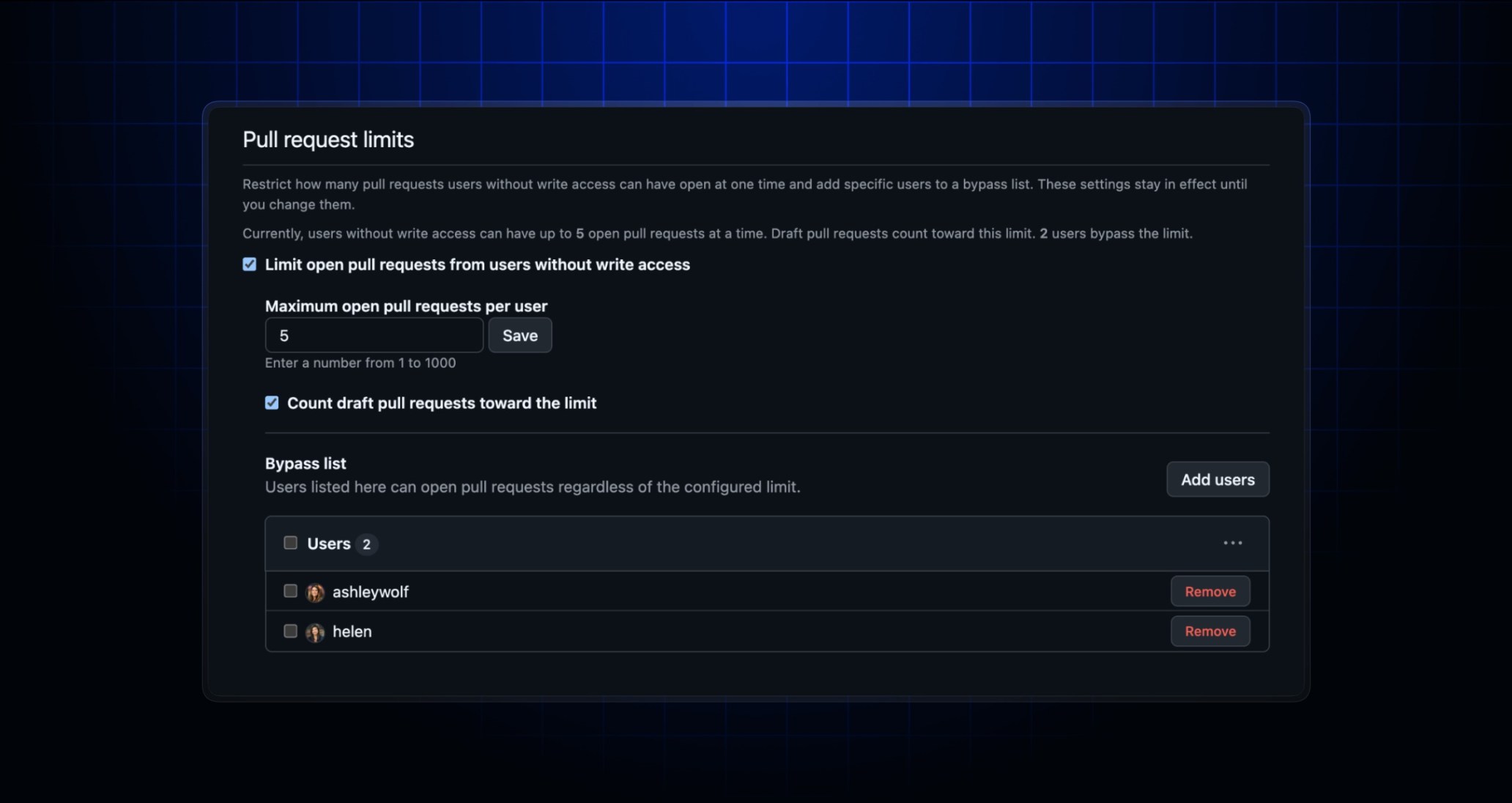
Maintainers can now choose to count draft pull requests toward a repository’s configured limit. Drafts previously did not count, so users could keep opening them despite a cap. GitHub says the optional setting is intended to reduce spam-related clutter, notifications and CI runs; it is not a mandatory change across all repositories.
The limit caps how many pull requests each user without write access can have open at once; at the cap, one must be closed or merged before another can be opened. Trusted contributors on a bypass list are exempt. Maintainers can review the new draft-count checkbox in their existing limit settings, while contributors should check whether a draft will use one of their available slots.

Sources and checked date: October 9, 2026
Comments
0No login needed. Edit or delete your comment from the same browser.
All comments 0
한국어 · English · 日本語No comments yet. Start the conversation.